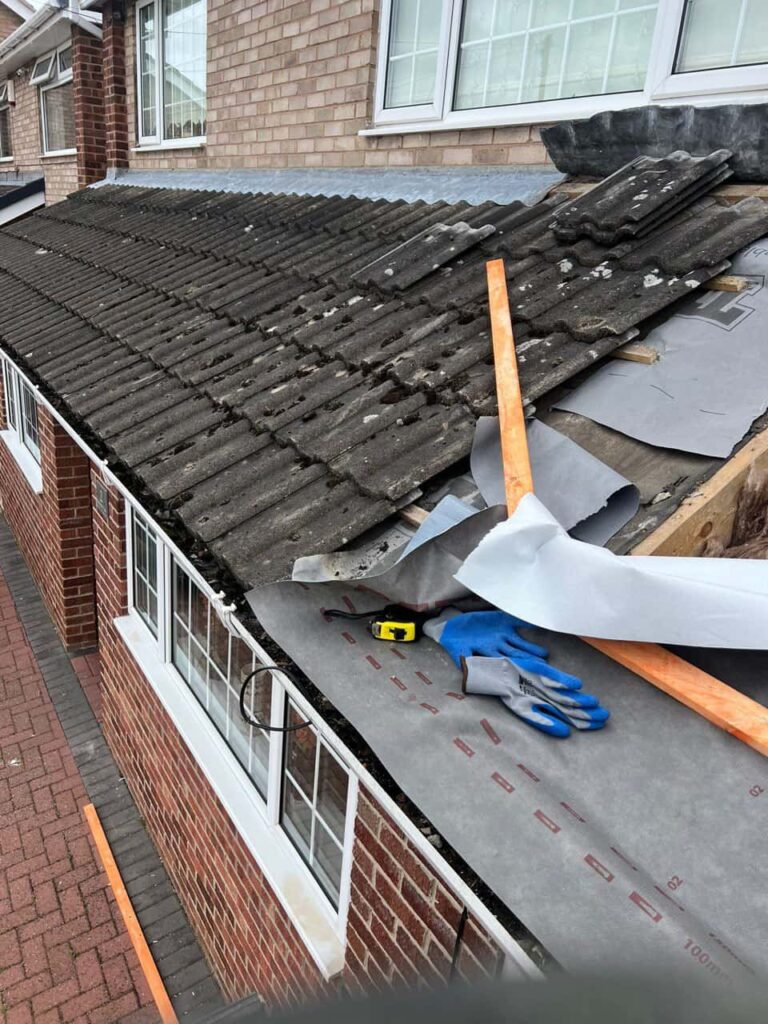
A chimney creates one of the most complex junctions in a pitched roof. Tiles, flashing, mortar and masonry must all work together to prevent rainwater from entering where the stack passes through the roof covering.
Minor deterioration around this area may not produce an immediate internal leak. Water can initially be absorbed by masonry or travel beneath the covering without reaching a visible ceiling. Addressing defects early can prevent moisture from affecting a wider section of the roof.
How Chimney Defects Can Lead to Roof Leaks
Chimney-related leaks are not always caused by one obvious fault. Several components can deteriorate independently or combine to create a route for water.
Damaged Flashing Can Allow Water Through the Junction
Flashing seals the transition between the chimney stack and roof covering. It is formed around the sides of the stack to direct water onto the tiles and down the roof.
Cracks, lifted edges, loose sections and failed joints can interrupt this protection. Even a narrow gap may admit wind-driven rain, especially where water runs around the back or sides of the chimney.
Failed Pointing Can Expose the Masonry
The mortar joints between bricks help keep the chimney stack stable and limit moisture penetration. Weathering can cause the pointing to crack, crumble or fall away.
Open joints allow rainwater to enter the masonry more easily. Continued saturation may increase deterioration and enable moisture to move towards the roof junction or chimney interior.
Cracked Flaunching Can Let Water Enter from Above
Flaunching is the sloped mortar around the base of chimney pots. It helps secure the pots and direct rainwater away from their bases.
As the material ages, it can crack or separate from the pots and surrounding masonry. Water may then enter through these openings and pass into the upper part of the stack, where it can be difficult to distinguish from a flashing defect below.
Porous or Damaged Brickwork Can Hold Moisture
Chimney stacks are particularly exposed to wind and rain. Bricks that have become cracked, spalled or excessively porous can absorb moisture even when the surrounding flashing appears intact.
Repeated wetting may gradually affect mortar joints and internal surfaces. Damp can then appear around the chimney breast or within the roof space without an obvious missing tile.
Problems Can Develop Behind the Chimney
The upslope side of a chimney must manage rainwater flowing down the roof. Depending on the roof design, this area may include a back gutter or another formed weatherproofing detail.
Debris can restrict drainage, while splits, poor joints or deterioration may allow water to collect. Because this section is difficult to see from ground level, a fault may remain unnoticed until staining appears internally.
Soakers May Be Hidden Beneath the Roof Covering
Soakers are weatherproofing components fitted between courses of tiles or slates alongside the chimney. They work with the visible flashing to form a layered defence against water.
As much of each soaker is concealed, deterioration may not be apparent during a basic visual check. A chimney can therefore appear adequately flashed while a hidden component beneath the covering is allowing moisture through.
Loose Pots and Fittings Can Affect the Stack
Chimney pots, cowls and other fittings should remain secure. Movement at the top of the stack can disturb the flaunching or create openings through which rain enters.
Fragments of mortar around the property or a pot that appears tilted can indicate deterioration. These signs warrant inspection before further movement affects the chimney or adjoining roof.
Water Can Travel Away from the Original Defect
A damp mark beside a chimney does not necessarily identify the precise point of entry. Water may follow flashing, underlay, battens or rafters before becoming visible inside the property.
This movement can make chimney leaks difficult to diagnose. Treating the area directly above the internal stain may leave the actual source unresolved.
Early Defects Can Affect Nearby Roofing Materials
Once water enters at the chimney junction, it can reach materials beyond the stack itself. Prolonged moisture exposure may affect:
- Roofing underlay
- Timber battens
- Rafters and roof decking
- Insulation
- Ceiling materials
- Adjacent tiles or slates
- Internal finishes around the chimney breast
What begins as a small flashing or pointing defect can therefore become a wider roofing problem if left unattended.
Warning Signs That a Chimney Needs Attention
Chimney defects are often easier to address before active dripping begins. Signs that may justify a closer inspection include:
- Cracked or missing mortar joints
- Flaking or damaged bricks
- Lifted or distorted flashing
- Cracks around the chimney pots
- Loose mortar fragments at ground level
- Damp staining within the roof space
- Discolouration around the chimney breast
- Musty conditions near the stack
- Debris collecting behind the chimney
- Repeated damp after wind-driven rain
Some of these signs may have more than one possible cause, so a professional assessment is important.
Why Ground-Level Checks Have Limitations
The upper surface and rear of a chimney are often hidden from view. Small cracks, failed soakers and defects in a back gutter may be impossible to assess accurately from below.
Binoculars or ground-level photographs may reveal obvious movement, but they cannot confirm the condition of concealed weatherproofing. Safe, suitable access is often required for a dependable diagnosis.
A Complete Inspection Is Better Than an Isolated Repair
Chimney leak investigations should consider the stack and roof junction as one system. Repointing a visible joint will not solve a split flashing detail, just as replacing flashing will not correct water entering through cracked flaunching.
A methodical assessment should examine the masonry, mortar, pots, flaunching, flashing, soakers and adjoining roof covering. This helps ensure that the recommended work addresses the actual cause rather than only the most noticeable symptom.
The Value of Professional Chimney and Roof Repairs
Professional attention is valuable because chimney defects often involve several materials and concealed details. The repair must restore effective water management while integrating correctly with the existing roof.
Fulbourn Roofing Repairs assesses both the chimney stack and the surrounding roof before recommending suitable work. This wider approach helps identify developing problems before they cause repeated or extensive water ingress.
Conclusion
Chimney defects should be addressed promptly because small failures in pointing, flashing, flaunching or masonry can eventually allow water into the roof. Moisture may travel beyond the original fault and affect underlay, timber and internal finishes before a visible leak develops.
If you have noticed deterioration around a chimney at your property in Fulbourn, Cambridgeshire, contact Fulbourn Roofing Repairs to arrange a professional assessment and determine the appropriate repair.
Call us on: 01223 659 397
Click here to find out more about Fulbourn Roofing Repairs
Click here to complete our contact form and see how we can help with your roofing needs.